

There was a time when the arrival of the postman was an eagerly awaited moment in every household. A handwritten letter could carry news from a distant family member, an invitation to a wedding, a congratulatory message, or simply a few lines expressing love and affection. Today, messages travel across the world in seconds. Yet, the postal system continues to remain an important part of everyday life, connecting people, businesses and communities.
Post: A bridge between people
Postal services have historically played a vital role in connecting individuals across geographical boundaries. Before telephones, email and social media became common, letters and postcards were the principal means of long-distance communication.
The postal network also helped connect villages and remote communities with towns and cities. For millions of people, the post office was not merely a place to send letters. It became a trusted public institution where people could access savings, money-transfer and other essential services.
Why postal services remain important
The importance of post extends far beyond the delivery of letters. Postal networks support communication, commerce, government services and financial inclusion.
For businesses, postal and parcel services provide an important link between sellers and customers. The growth of online shopping has created a new role for postal networks, with parcel delivery becoming an increasingly significant part of their operations.
World Postal Day: Celebrating a global network
World Postal Day is observed every year on October 9, marking the anniversary of the establishment of the Universal Postal Union (UPU) in 1874.
The day provides an opportunity to recognise the contribution of postal workers and the role of postal services in connecting communities across the world. It also highlights how postal organisations are adapting to changing communication and business patterns.
The postal system is one of the world’s oldest organised communication networks, but its relevance has not ended with the arrival of the digital age. Instead, its role is changing.
From letters to parcels
The biggest transformation in postal services has been the decline in traditional letter communication and the growth of parcel delivery.
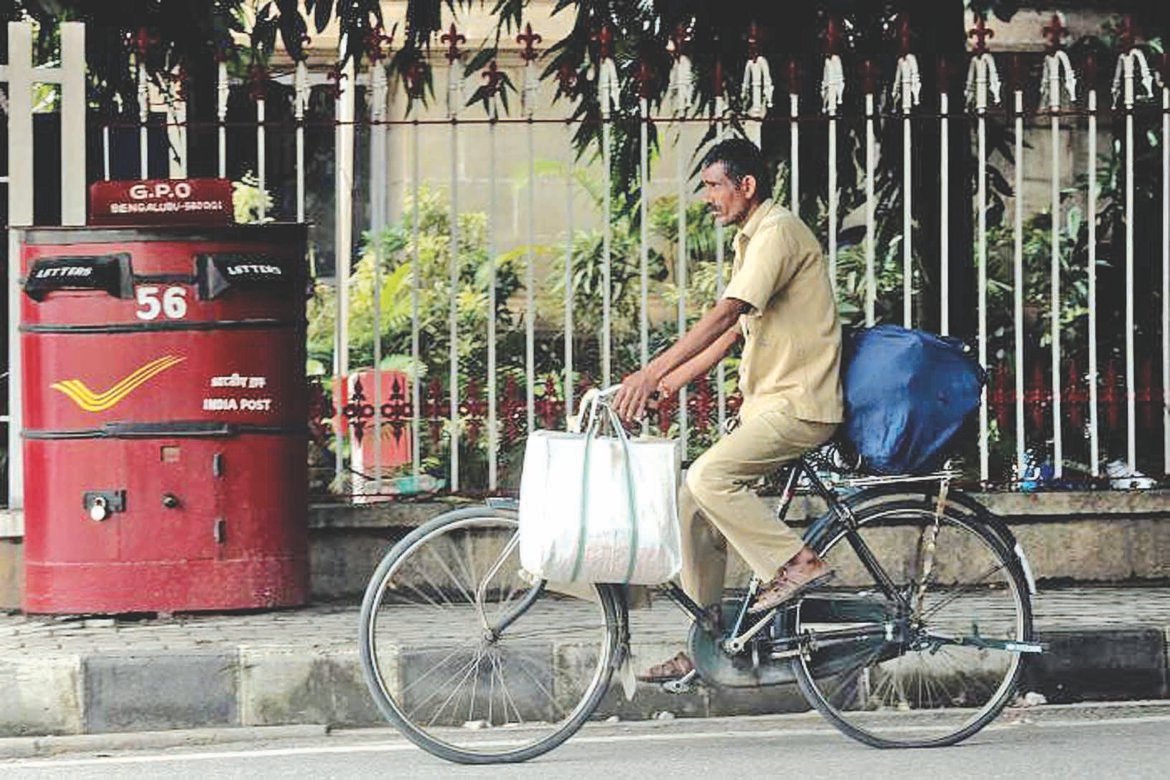
Email, instant messaging and social media have significantly reduced the need for personal letters. Official communication too has increasingly moved online. As a result, the traditional image of the postman carrying bags filled largely with letters has changed.
At the same time, the expansion of e-commerce has generated demand for reliable delivery networks. Parcels, documents, registered articles and other consignments have become important components of modern postal operations.
India Post in a changing world
In India, the postal network has a particularly important role because of the country’s vast geographical spread and large rural population. India Post operates one of the world’s largest postal networks, reaching communities across urban, rural and remote areas.
The modern post office is no longer restricted to stamps, letters and postcards. Postal services have expanded into areas such as parcel delivery, financial services, savings schemes, insurance and digital-enabled services.
This transformation has allowed the postal network to remain relevant even as traditional letter-writing has declined.
Despite technological advancement, a handwritten letter has a value that a digital message often cannot completely replace.
A letter written by hand carries the writer’s handwriting, emotions and personal touch. Letters exchanged between family members, soldiers and loved ones have often become treasured memories preserved for generations.
For many people, receiving a physical letter still creates a sense of anticipation and emotional connection that an instant notification cannot replicate.
The post of tomorrow
The future of postal services is unlikely to be about choosing between letters and technology. Instead, it will be about combining the strengths of both.
A modern postal system can use digital technology for tracking, sorting, payments and customer services while continuing to provide a physical network that reaches people and places beyond the digital world.
More than a message
The history of post is ultimately the history of human connection. On World Postal Day, the post deserves to be remembered not merely as an old-fashioned method of communication, but as a public service that has continuously adapted to the needs of society.The letter may have become less frequent, but the need to connect has never disappeared.
From Letters to Lifelines: Why the Post Still Matters in a Digital World
Leave a Reply